
Category: Health

  • Itchy Scalp: Causes, Prevention, and Home Remedies for Relief

    Itchy Scalp: Causes, Prevention, and Home Remedies for Relief

    An itchy scalp can be frustrating, distracting, and sometimes embarrassing. While occasional itching is common, persistent scalp irritation may signal an underlying issue such as dandruff, product sensitivity, dry skin, or a scalp condition.

    The good news is that most cases of an itchy scalp can be managed with proper scalp care and simple home remedies. Here’s everything you need to know about the causes, prevention, and treatment of an itchy scalp.
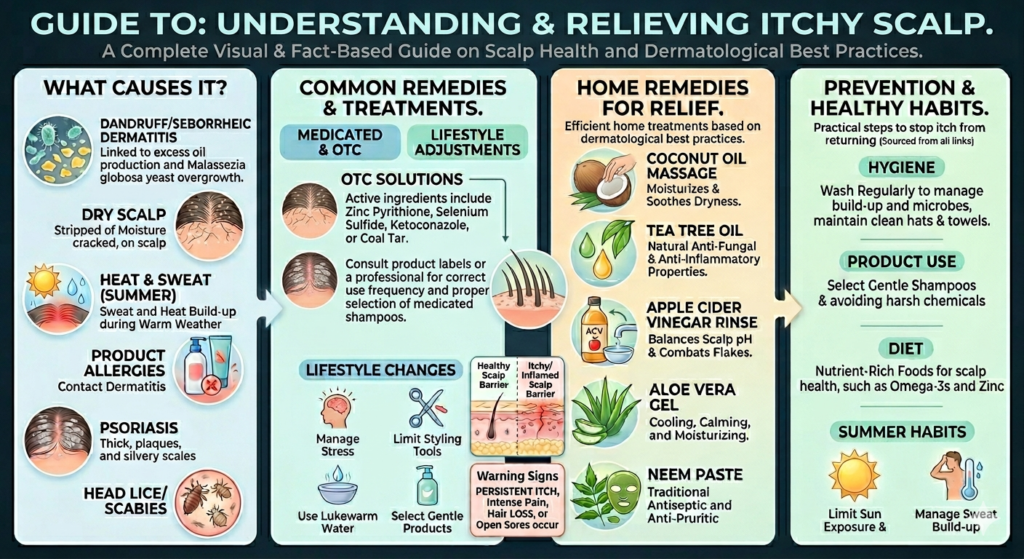

    What Causes an Itchy Scalp?

    An itchy scalp can develop for several reasons, ranging from mild irritation to underlying skin conditions.

    1. Dandruff (Most Common Cause)

    Dandruff is one of the leading causes of scalp itchiness. It occurs when the scalp sheds skin cells more rapidly than normal, leading to visible white flakes and irritation. In many cases, dandruff is linked to seborrheic dermatitis, a condition associated with excess oil production and the overgrowth of a naturally occurring yeast called Malassezia.

    2. Dry Scalp

    Cold weather, excessive shampooing, hot water, and dehydration can strip moisture from the scalp, causing dryness, flaking, and itching.

    3. Reaction to Hair Products

    Shampoos, hair dyes, styling products, and conditioners may contain ingredients that irritate sensitive skin. This can result in itching, redness, and scalp inflammation.

    4. Product Build-Up

    Using multiple hair products without properly cleansing the scalp can lead to the accumulation of oils, dirt, and residue, triggering irritation and itching.

    5. Skin Conditions

    Conditions such as eczema, psoriasis, and seborrheic dermatitis can affect the scalp and cause persistent itching, redness, and scaling.

    6. Stress and Environmental Factors

    Stress can worsen dandruff and other scalp conditions. Hot, humid weather and excessive sweating may also irritate the scalp and increase itchiness.


    Common Symptoms of an Itchy Scalp

    Depending on the cause, symptoms may include:

    • Persistent itching
    • White or yellow flakes
    • Dry, tight scalp
    • Redness or irritation
    • Oily patches on the scalp
    • Scaly skin
    • Burning or tingling sensations

    If symptoms are severe or persistent, a medical evaluation may be necessary.


    How to Prevent an Itchy Scalp

    Prevention is often easier than treatment. These simple habits can help keep your scalp healthy:

    Wash Your Hair Regularly

    Regular shampooing helps remove excess oil, sweat, and product build-up that can contribute to itching and dandruff.

    Use Gentle Hair Products

    Choose shampoos and conditioners designed for sensitive scalps. Avoid products containing harsh fragrances or irritating chemicals if you notice they trigger itching.

    Rinse Thoroughly

    Leaving shampoo or conditioner residue on the scalp can cause irritation. Make sure to rinse hair completely after washing.

    Avoid Excessive Heat

    Very hot water and frequent heat styling can dry out the scalp and worsen itching. Use lukewarm water whenever possible.

    Manage Stress

    Stress can aggravate dandruff and other inflammatory scalp conditions. Regular exercise, sleep, and relaxation techniques may help.


    Home Remedies for Itchy Scalp Relief

    While severe scalp conditions may require medical treatment, several home remedies can provide relief from mild itching and dandruff.

    1. Coconut Oil

    Coconut oil helps moisturize the scalp and may improve the scalp’s protective barrier. Some studies suggest it can also help support a healthier scalp microbiome.

    How to use:

    • Warm a small amount of coconut oil.
    • Massage gently into the scalp.
    • Leave for 30 minutes to overnight.
    • Wash with a mild shampoo.

    2. Aloe Vera

    Aloe vera has soothing, anti-inflammatory, and moisturizing properties that may help calm scalp irritation and itching.

    How to use:

    • Apply fresh aloe vera gel directly to the scalp.
    • Leave for 15–20 minutes.
    • Rinse thoroughly.

    3. Tea Tree Oil

    Tea tree oil has antifungal and antimicrobial properties that may help reduce dandruff-related itching. Because it can irritate sensitive skin, always dilute it before use.

    How to use:

    • Add a few drops to your regular shampoo.
    • Use 2–3 times per week.

    4. Keep the Scalp Clean

    A clean scalp reduces the accumulation of oil, dead skin cells, and product residue that can contribute to itching and dandruff.

    5. Maintain a Healthy Diet

    A balanced diet rich in omega-3 fatty acids, zinc, vitamins, and adequate hydration supports overall skin and scalp health.


    When Should You See a Doctor?

    Consult a dermatologist if:

    • The itching lasts for several weeks.
    • Home remedies do not help.
    • You experience severe redness, swelling, or pain.
    • You notice hair loss.
    • There are open sores, bleeding, or signs of infection.

    Persistent scalp itching may indicate a condition that requires prescription treatment.


    Final Thoughts

    An itchy scalp is often caused by dandruff, dry skin, product sensitivity, or scalp conditions such as seborrheic dermatitis. Fortunately, proper scalp hygiene, gentle hair care products, and simple home remedies like coconut oil, aloe vera, and tea tree oil can provide relief for many people.

    If symptoms persist despite good scalp care, don’t ignore them. A dermatologist can help identify the underlying cause and recommend the most effective treatment.


    Frequently Asked Questions (FAQ)

    Can dandruff cause an itchy scalp?
    Yes. Dandruff is one of the most common causes of scalp itching and flaking. (American Academy of Dermatology)

    Is coconut oil good for an itchy scalp?
    Coconut oil may help moisturize the scalp and reduce dryness-related itching. (Healthline)

    Can stress make scalp itching worse?
    Yes. Stress can trigger or worsen dandruff and other scalp conditions. (Mayo Clinic)

    When should I worry about an itchy scalp?
    Seek medical advice if the itching is severe, persistent, or accompanied by hair loss, sores, or signs of infection. (Mayo Clinic)

  • 10 Subtle Habits of Emotionally Intelligent People 

    10 Subtle Habits of Emotionally Intelligent People 

    When we think about emotional intelligence (EQ) or emotional maturity, we tend to picture the “perfect” communicator—someone who is always radically empathetic, always perfectly calm, and always knows exactly what to say.

    But real emotional intelligence is rarely that loud. More often, it shows up in the quiet, messy choices we make while navigating our relationships and inner world.

    If you notice these ten subtle behaviors in yourself, your emotional instincts are much sharper than you’re giving yourself credit for.


    1. You can name the exact flavor of your bad mood

    When everything feels heavy, it’s easy to just throw your hands up and say, “I’m in a bad mood.” But if you have high EQ, you don’t stop there. You dig a little deeper to find the exact word for what hurts. Are you actually angry, or are you just feeling unappreciated? Are you stressed, or are you just lonely?

    • In real life: Instead of shutting down around your partner and saying, “I’m just tired,” you can pinpoint the real issue: “I’m actually feeling really invisible because my team completely glossed over my ideas at work today.”

    2. You give people room to have a bad day

    When someone close to you suddenly gets quiet, distant, or snappy, your first instinct isn’t to panic and assume you ruined the relationship. You don’t instantly spiral into “What did I do wrong?” Emotional maturity gives you the perspective to realize that other people’s moods are rarely a reaction to you.

    • In real life: If a coworker sends you a brutally short, one-word email, you don’t stay up all night wondering if they hate you. You just assume they’re drowning in their own deadlines and moving fast.

    3. You own the space between a feeling and a reaction

    We all get triggered, hurt, and angry. But emotional intelligence creates a tiny, crucial breathing room right after you get stung. Instead of immediately firing back with the first defensive thought that pops into your head, you can feel the hot surge of adrenaline, take a breath, and choose how you want to show up.

    • In real life: When someone calls out your mistake in a big meeting, you feel the urge to push back defensively. Instead, you wait three seconds, let the panic pass, and say calmly: “Let’s look at the numbers together so we can get it right.”

    4. You don’t run away from heavy feelings

    When uncomfortable emotions like anxiety, grief, or jealousy show up, it’s natural to want to numb them with a screen, a drink, or a distraction. High EQ means you’ve learned to sit with the discomfort. You can feel the physical tightness in your chest or the pit in your stomach, acknowledge it, and let it pass through you without judging yourself for having it.

    • In real life: Before stepping on stage for a huge presentation, you don’t try to force your nerves down. You tell yourself, “My hands are shaking because I care about this, and that’s completely okay.”

    5. Your apologies are about them, not your ego

    A weak apology tries to protect your image (“I didn’t mean to upset you, but…”). A mature, emotionally mature apology doesn’t care about excuses; it cares about healing the rupture. You focus entirely on the impact of what you did and how it made the other person feel, regardless of what your original intentions were.

    • In real life: You don’t say, “I’m sorry if you took my comment the wrong way.” You say, “I’m sorry I interrupted you in front of the team. It was disrespectful, and it looked like I didn’t value your time.”

    6. You’ve stopped trying to “fix” everyone’s pain

    When a friend comes to you hurting, you resist the urge to jump in with advice, a five-step plan, or a silver lining. Emotionally mature people know that what people usually need isn’t a mechanic—they just need a witness. You are comfortable letting someone be sad or angry in front of you without trying to rush them out of it.

    • In real life: When a friend calls crying over a breakup, you don’t tell them how to handle it. You just listen and say, “I am so incredibly sorry. This is completely heartbreaking, and I’m right here with you.”

    7. You’re at peace with being misunderstood

    Trying to force everyone to see your side of the story is exhausting, and frankly, it’s a losing battle. High EQ means you have the internal quiet to walk away from a lopsided disagreement. You know who you are and what your values are, and you don’t need the validation of convincing someone who is determined to misjudge you.

    • In real life: If an acquaintance deliberately twists your words on social media, you don’t lose your afternoon typing out a furious 20-comment debate. You accept that they aren’t listening, close the app, and move on.

    8. You can read the unspoken energy of a room

    You don’t need people to tell you when things are awkward or tense; you can feel it the second you walk through the door. You pay attention to the shifts in body language, the heavy silences, and the avoided eye contact. This allows you to navigate sensitive situations with a soft touch rather than stepping on toes.

    • In real life: If you walk into the kitchen and notice two family members washing dishes in rigid, aggressive silence, you don’t burst in making loud jokes. You read the room, drop your volume, and ask quietly how you can help.

    9. You care more about growing than being right

    Protecting our ego feels safe, but it keeps us small. If you have high emotional intelligence, you are capable of hearing tough, painful feedback without shutting down or cutting the other person off. You are willing to trade the temporary comfort of being “perfect” for the messy, real work of getting better.

    • In real life: When your partner tells you that you haven’t been present lately, you don’t launch into a list of all the chores you’ve done. You take it in and say, “You’re right. I’ve been incredibly distracted, and I want to fix that.”

    10. You are totally fine saying “I don’t know”

    Pretending to have all the answers is usually just armor for our insecurities. An emotionally intelligent person doesn’t view a lack of knowledge as a flaw or a threat to their status. You can say “I don’t know” with total confidence because your self-worth is rooted in your curiosity and your honesty, not in being a know-it-all.

    • In real life: When a client asks you a highly specific question you aren’t sure about, you don’t try to wing it or bluff. You look them in the eye and say, “I want to give you the exact details on that, so let me pull the data and follow up with you first thing tomorrow.”

    The Takeaway

    True emotional intelligence isn’t about achieving a flawless state of Zen or never feeling angry, anxious, or insecure again. We are human, and the waves of emotion will always come.

    The real magic of high EQ is found in how you handle those waves. It’s the quiet decision to pause when you want to scream, the courage to sit with a feeling that hurts, and the humility to look at your own flaws without defensive armor. If you recognized yourself in even a few of these signs, give yourself some credit—you are navigating the messy, complex world of human emotion with a lot more grace and awareness than you realize.